Trans-Duodenal Approcah for CBD Stones
The trans-duodenal approach for CBD stones is a surgical technique used by the surgeon during the operation which is used to remove stones from the common bile duct (CBD).
This approach for the removal of stones is done when less invasive methods are not suitable or have failed. This procedure is typically performed by open or laparoscopic surgery.
What is the Trans-Duodenal Approach?
The trans-duodenal approach involves making an incision in the duodenum (first part of the small intestine), which gives direct access to the ampulla and allows for the removal of stones lodged in the distal CBD.
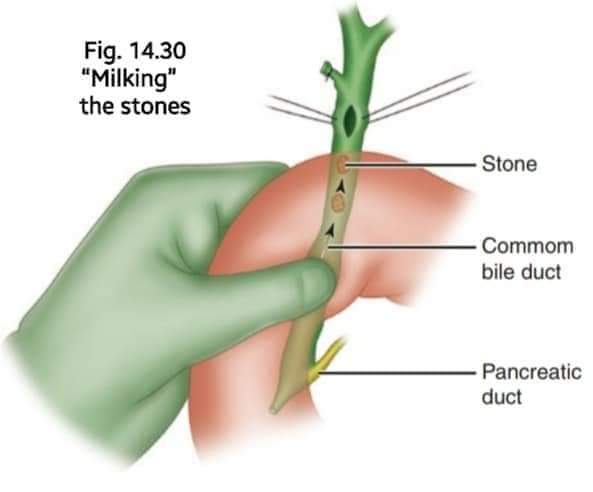
This approach is the Removal of the CBD stones by instrumentation (Randall stones forceps, scoops of several types and sizes, irrigation catheter, biliary Fogarty catheter) or extrinsic pressure by milking the stones to the upward #choledochotomy (Figs. 14.30and 14.31).
Indications for Transduodenal Approach
The following are the most common indications for this bile duct stone removal surgery
- Impacted stones in the lower CBD
- Large or multiple CBD stone lodges
- ERCP (Endoscopic Retrograde Cholangiopancreatography) Failure
- Associated biliary obstruction or strictures
Procedure Overview
- Surgical opening of the duodenum (duodenotomy)
- Identification of the ampulla of Vater
- Stone extraction using instruments or saline flushing
- Closure of the duodenum after ensuring duct clearance
Surgical Approach for CBD Stones -Trans Duodenal Approach
🩺 Steps of Transduodenal Approach for CBD Stone Removal
1. Patient Preparation & Positioning
- General anesthesia is administered
- Patient positioned supine
- Abdomen prepared and draped in sterile fashion
2. Abdominal Entry
- Upper midline or right subcostal incision made
- Peritoneal cavity entered
- Liver, gallbladder, and duodenum inspected
3. Kocher Maneuver
- Mobilization of the duodenum by incising the peritoneum along its right border
- Allows exposure of the second part of the duodenum and pancreas
4. Identification of Duodenum & Ampulla
- Second part of duodenum identified
- Palpation may help locate stones near the ampulla
5. Duodenotomy
- Longitudinal incision made on the anterior wall of the second part of the duodenum
6. Identification of Ampulla of Vater
- Visual identification of the Ampulla of Vater
- Stay sutures may be placed for better exposure
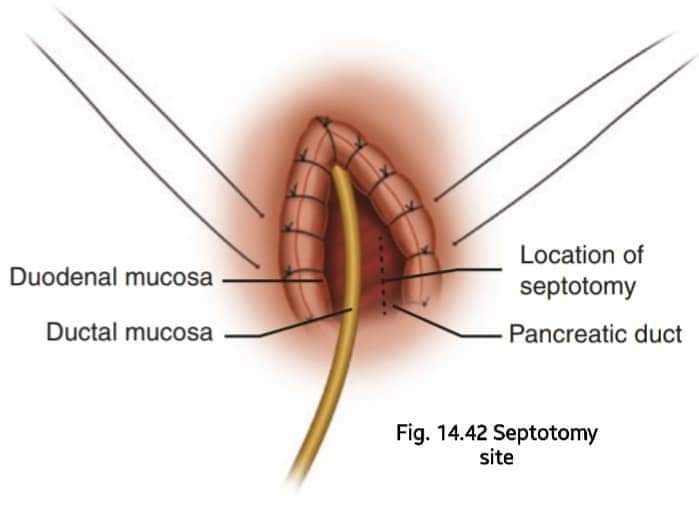
7. Sphincterotomy / Sphincteroplasty
- Incision made over the ampulla to open the distal CBD
- Enlargement of the opening (sphincteroplasty) to facilitate stone removal
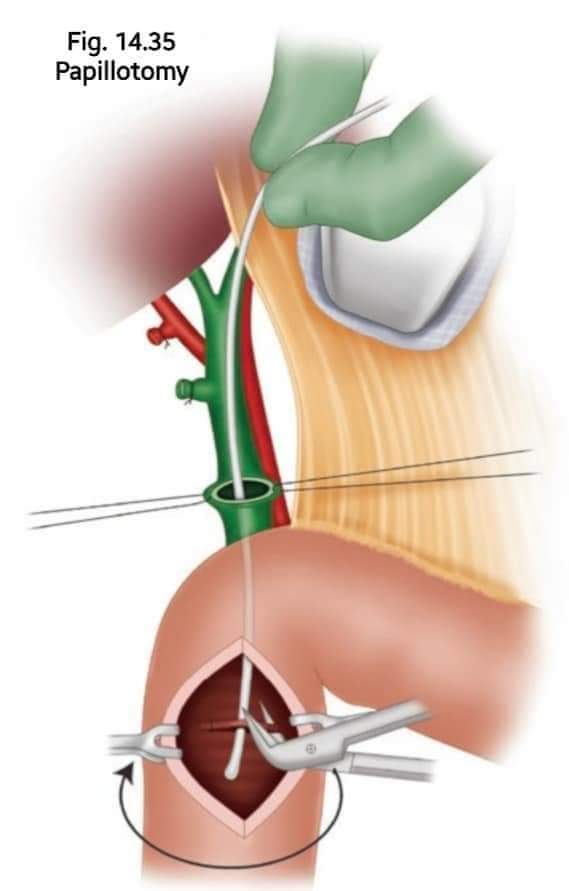
8. Stone Extraction
- Stones removed using:
- Forceps
- Balloon catheter
- Saline flushing
9. Confirmation of Clearance
- Irrigation or probing to ensure no residual stones and May use intraoperative cholangiography if needed
10. Closure of Ampulla (if required)
- Sphincteroplasty edges sutured to maintain patency
11. Duodenal Closure
- Duodenotomy closed (usually transversely to prevent narrowing)
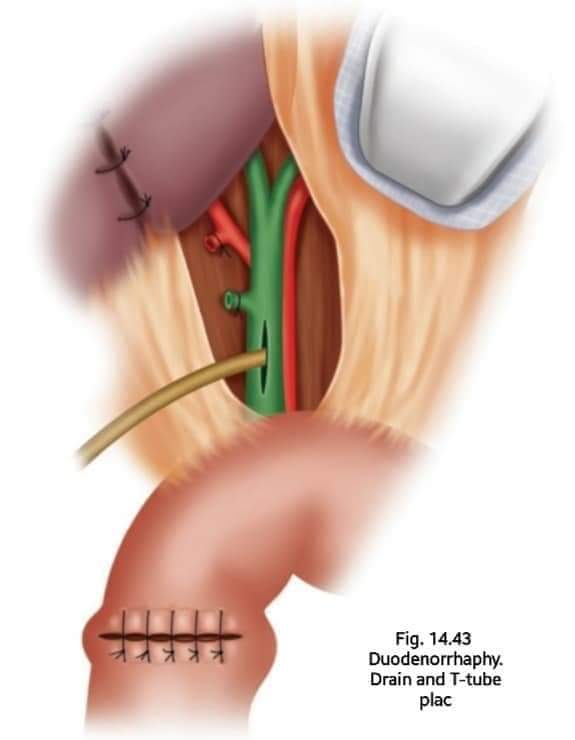
12. Drain Placement & Closure
- Drain may be placed near operative site
- Abdominal wall closed in layers
Sources for the Procedure : Bailey & Love’s Short Practice of Surgery Schwartz’s Principles of Surgery Sabiston Textbook of Surgery World Health Organization (general surgical care guidelines)
Risks and Complications on bile duct stone removal
- Duodenal leak or infection
- Pancreatitis
- Bleeding
- Postoperative morbidity