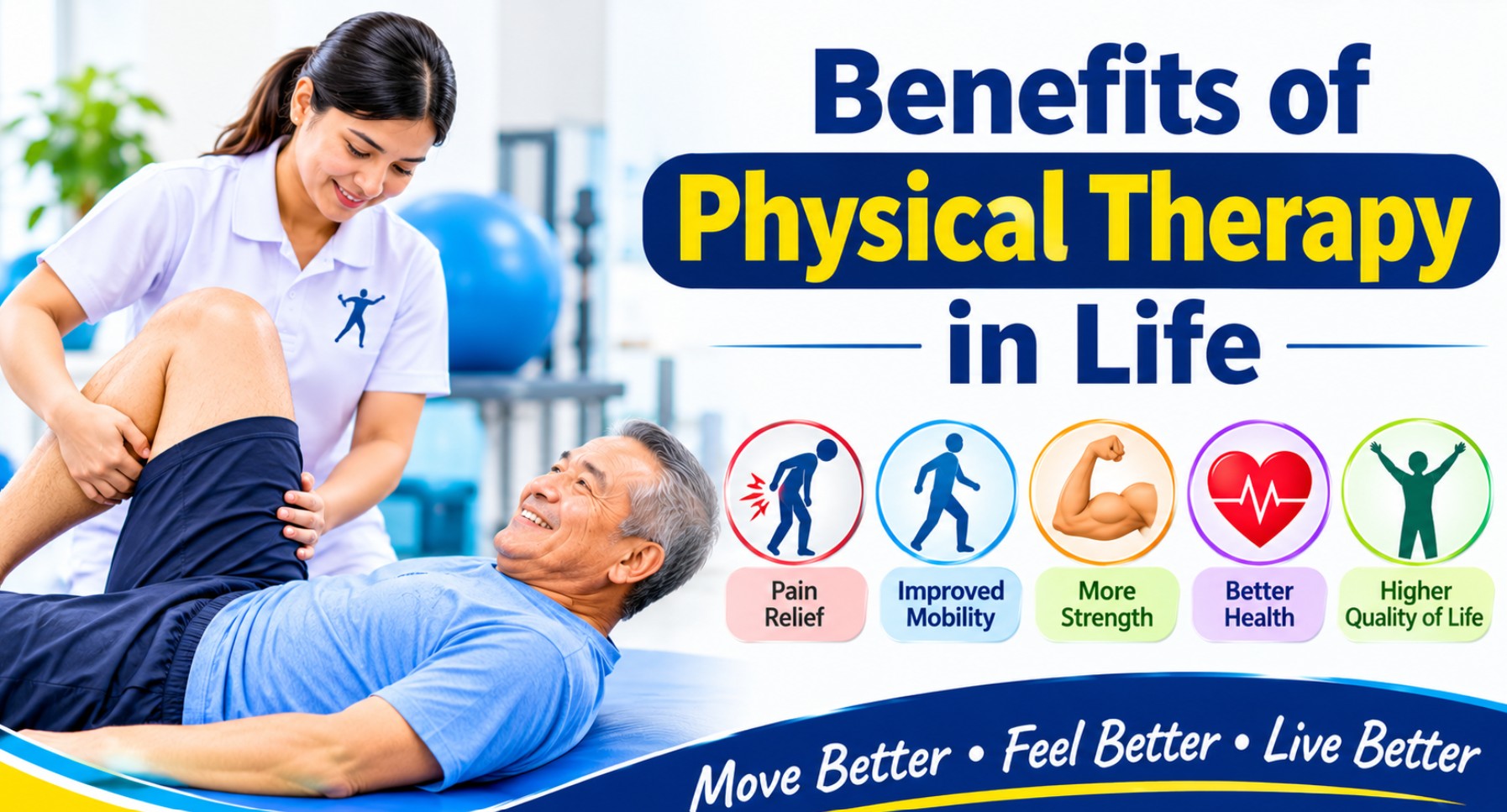
Physical therapy helps improve mobility, reduce pain, restore strength and promote a healthier life.
Physiotherapy, an integral part of modern medicine, helps you lead an active life and relieves pain while increasing your mobility. It is widely used in the management of conditions such as musculoskeletal disorders, surgical rehabilitation, sports injuries, and neurological disorders.
Physiotherapy benefits extend beyond eliminating pain; physiotherapy aids in improving joint movement, muscular flexibility and strength, as well as co-ordination and balance.
The need for physiotherapy is growing in Nepal as musculoskeletal issues, RTA, sports injuries, lifestyle (sedentary) and age-associated physical disabilities are on the rise. You can find many physiotherapy and rehabilitation centers for proper therapy by a physiotherapist
Below are the main benefits of physiotherapy and how it will help you to stay healthy and live well.
1. Pain Relief
The main benefit of physiotherapy is pain management.
Physiotherapy will benefit patients with:
- Lower back pain
- Neck pain
- Knee pain
- Arthritis-related pain
- Muscle pain
- Sports-related injuries
All grade(s) of manual therapy, education and the application of appropriate physical treatments are useful for reducing symptoms and improving function.
2. Optimizes Mobility and Flexibility of Joints
Limited range of motion due to joint stiffness. This may affect walking, reaching, bending and climbing.
The physiotherapy will involve gentle stretching, mobilisation exercises and specific hands-on therapy to mobilise and improve your joints’ range of movement and flexibility.
Particularly beneficial if you have had an injury, broken a bone, had surgery, or have been immobilized for a prolonged period of time.
3. Build muscle strength
Weakness of the muscles may be due to an injury, operation, or simply due to old age, a neurological disease, or the demands of lying in bed, which hamper the architecture and mechanism of muscle physiology
A physiotherapy program including increasing demands of strengthening exercises for improving muscle capacity and maintaining normal movements of the body is included.
When our muscles are stronger, we can perform everyday tasks with more ease and comfort.
4. Enhances Balance and Coordination
Movement and coordination are essential to walking around safely and getting about your world.
Physiotherapy to enhance balance involves:
- Static balance training exercises
- Dynamic balance exercise
- Coordination exercises
- Functional movement training
- Gait rehabilitation
These are the applications that can prove handy to older people, stroke patients, and patients who are suffering from brain diseases.
5. Accelerates Functional Rehabilitation Following Injury
Physiotherapy is an important part of managing post-sports injury, fracture, ligament and muscle injury.
Rehab can help restore strength, coordination, flexibility and range of motion.
It supports a safe and gradual return to work, sport and daily activities.
6. Supports Stroke Rehabilitation
Brain attack: weakness, paralysis, trouble walking and balancing. Stroke rehab and physiotherapy can help a Stroke survivor to recover faster with the following rehab plans and physiotherapy
- Bed mobility training
- Seated and standing balance
- Muscle strengthening
- Walking exercises
- Task-specific training
- Functional rehabilitation
We aim to restore each patient to maximum independence.
7. Enhances Body Positioning and Helps to Avoid Movement-Related Difficulties
Pain and loss of mobility can come from sitting in the wrong way, or for too long.
The patient will be educated on the proper posture, ergonomics at work, movement patterns, and exercises.
Back training and postural education.
8. Helps in Healing Post-Operation
Likewise, physiotherapy after surgery is particularly interesting after many orthopedic and other operations.
- You could be advised after:
- Total knee replacement
- Total hip replacement
- ACL reconstruction
- Fracture fixation
- Spinal surgery
- Shoulder surgery
Rehabilitation to recover movement, muscle function, gait and functional level as indicated by the surgical protocol.
9. Minimizes Accidents for Elderly Patients
Potential problems for older people include: muscle weakness, problems with balance and slower movements.
Physiotherapy can address falls risk via:
- Balance training
- Strengthening exercises
- Walking practice
- Functional training
- Safety at Home Education
- Support physical activity and mobility to maintain independence.
10. Enhances Lung Function
Respiratory physiotherapy might have a place in a few patients with a respiratory problem.
Treatment may include:
- Breathing exercises
- Airway clearance techniques when indicated
- Exercise training
- Clinical chest physiotherapy as specified
- Pulmonary rehabilitation
- Help in the management of respiratory symptoms and functional capacity
- Help in increasing exercise tolerance.
11. Proposes a Dynamic and Healthy Lifestyle
Don’t limit what physiotherapy can do.
Promotes the use of body conditioning and exercise education for preventive health care along with emphasis on good posture and care to prevent injury.
Exercising regularly can help improve overall fitness and a healthier way of life.
12. Enhances Life Quality
Your ability to work, to do family responsibilities, and to learn and participate in society can be restricted by pain or muscle weakness.
Improve your ability to do everyday tasks and be active again.
Increasing mobility and physical independence will improve physical and mental health.
Physiotherapy in Nepal
Importance of physiotherapy in Nepal. It is used for Rehabilitation after road traffic accidents, fractures, Orthopedic surgery, stroke, sports injuries, and chronic musculoskeletal disorders.
Increasing the awareness about the practice of physiotherapy and facilitating better access to rehabilitation services will empower those living in rural and urban areas alike.
Rehabilitation is made available in hospitals, community health centers, physiotherapy clinics, rehab centers, and other medical facilities.
Conclusion
Pain relief, greater movement and flexibility, improved muscle strength and endurance, balance and coordination, healing and recovery from injury, and greater independence in all activities of daily living.
It’s a fundamental aspect of healthcare for individuals of all ages and physical capabilities.
Not just a treatment, but the way to a healthier life, better movement and greater independence.
Frequently Asked Questions
1. What are the main benefits of physiotherapy?
The main benefits of physiotherapy are pain reduction, improved mobility, strength development, balance improvement, injury recovery and improvement of quality of life.
2. Can physiotherapy reduce pain?
Yes. When it comes to most musculoskeletal conditions, you can rest assured your physiotherapy assessment, treatment and advice is tailored to your condition.
3. How often do I need to go to physiotherapy?
Rate is based on patient condition, Treatment outcome, Recovery & Physiotherapist assessment.
4. Is physiotherapy for old people?
Yes. It can improve strength, help with walking, improve balance and balance and help with independence.
5. Can physiotherapy be helpful after surgery?
Yes. This is an important feature of the rehabilitation of a large number of different surgical procedures.
6. Is physiotherapy only for the injured?
Not at all. It also increases preventative health care, athletic conditioning, technique, a nd injury prevention.
This article is for general education only. Every person must be individually evaluated and treated by a trained physiotherapist.